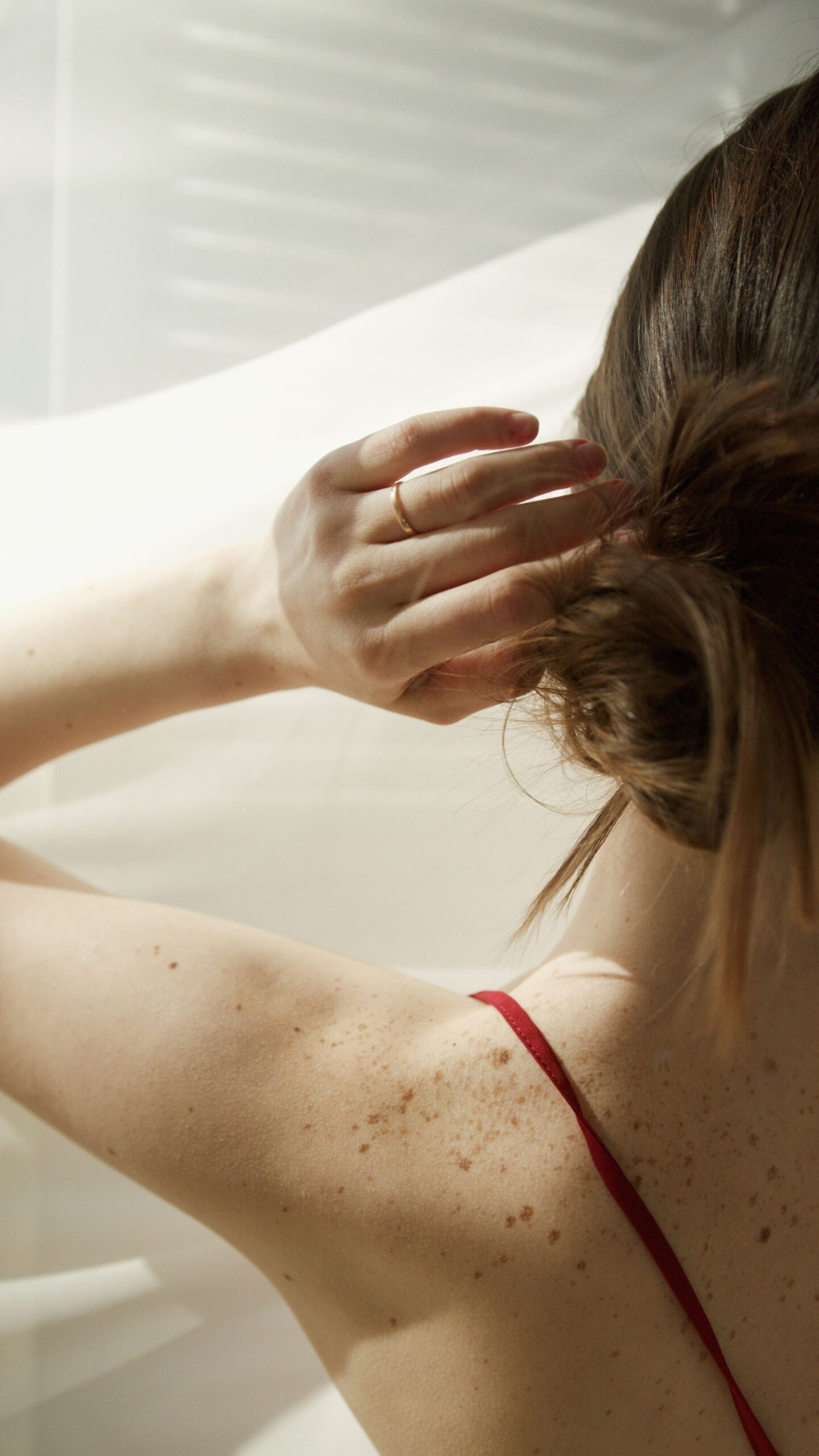
Trichotillomania involves repeated urges to pull or twist the hair, which can lead to thinning or bare patches. Tic disorders involve tics: sudden, repetitive movements or sounds, such as blinking, shrugging, sniffing or clearing the throat. Both can be hard to control, and both often occur alongside anxiety.
At The Anxiety Treatment Center of Greenwich, we treat trichotillomania and tic disorders as part of our specialized care for anxiety-related conditions. Our co-founder Jill Vaughan Tesei has training in Habit Reversal Therapy for tic disorders and trichotillomania, and Maryellen Pachler Kennell’s clinical expertise includes treating both. Visit our Understanding Anxiety page to learn more about related conditions.
Hair pulling often begins between ages 11 and 13, and tics in Tourette syndrome usually begin between ages 5 and 10, though both can start at other ages. Signs may include:

Constant tugging, pulling or twisting of the hair, often followed by a sense of relief.
An uneven look to the hair, bare patches or overall thinning.
Sudden, repeated movements such as blinking, squinting, shrugging the shoulders or jerking an arm.
Repeated sounds such as sniffing, humming, clearing the throat or calling out a word or phrase.
Many tics are mild and don’t need treatment. Help is worth considering when tics or hair pulling cause pain or injury, get in the way of school, work or social life, or cause stress. Trichotillomania often occurs alongside anxiety, depression or a poor self-image, and many children with Tourette syndrome also have another condition, such as ADHD, anxiety or OCD.
Because OCD and tics can occur together, you may also want to read about obsessive-compulsive disorder (OCD).
Behavioral therapy plays a central role for both conditions. Habit reversal builds awareness of the behavior and teaches a competing response, an alternative action that can’t happen at the same time. For tics, the Comprehensive Behavioral Intervention for Tics (CBIT) builds on habit reversal and has been shown to reduce tic symptoms in children and adults. Medication can also help in some cases.
Our care is individualized and evidence-based. Our co-founder Jill Vaughan Tesei has training in Habit Reversal Therapy, and for children and teens we often work closely with parents. When appropriate, care can include careful, collaborative medication support. Learn more about our treatment and therapy options.
Getting support begins with a simple call.
Treatment is designed around age, symptoms and goals.
No. Many tics don’t affect daily life. Treatment is worth considering when tics cause pain or injury, interfere with school, work or social life, or cause stress.
Habit reversal has two main parts: awareness training, in which a person learns to notice each tic or urge, and competing response training, in which they learn an alternative behavior that can’t happen at the same time.
It can be. Trichotillomania often occurs alongside anxiety, depression or a poor self-image.
Yes. We provide specialized care for children, adolescents and adults, and for younger clients we often work closely with parents.
We don’t bill insurance directly, but we encourage you to explore your out-of-network benefits. Our services are generally reimbursed by health savings accounts.
If hair pulling or tics are causing stress for you or your child, we’re here to help. Call our office at (203) 769-1365 or reach out through our contact page.

We provide expert diagnosis and evidence-based treatment for anxiety disorders in children, adolescents, and adults—helping individuals and families move forward with clarity and confidence.
© 2026 All Rights Reserved | Anxiety Treatment Center of Greenwich | Privacy Policy | Terms and Conditions
Website design and marketing by J Curve Advertising


