
Some fears are hard to practice facing in everyday life. A flight can’t be paused halfway, a crowd can’t be gathered on demand, and some triggers are simply impractical to recreate in a therapy room. Virtual reality (VR) therapy offers another route: a headset presents a computer-generated, three-dimensional scene that shifts naturally as you turn your head, so it can feel as though you are really there.
At The Anxiety Treatment Center of Greenwich, VR is used for phobias, OCD triggers and social anxiety as a way to practice exposure therapy. Because the environment is controlled, you can approach a feared situation gradually and at your own pace, with your clinician guiding each step, and build confidence you can carry into real life.


VR therapy rests on the same idea as traditional exposure: gradually facing feared situations in a safe, supportive environment, reducing avoidance and building confidence over time. The difference is the setting. Instead of traveling to the feared place, the situation is brought to you as a simulation whose intensity can be adjusted as you progress. It is one tool within a broader cognitive behavioral therapy (CBT) plan.

A headset shows a 3D environment that moves with your head, so a feared situation can feel real while you stay safely in the room.
Your clinician can change what you see and how intense it is, starting small and stepping up only when you feel ready.
Situations like heights, flying or speaking to a group can be rehearsed in session when real-life practice is difficult to set up.
VR complements traditional exposure rather than replacing it; the goal is confidence that carries over to the situations you face.
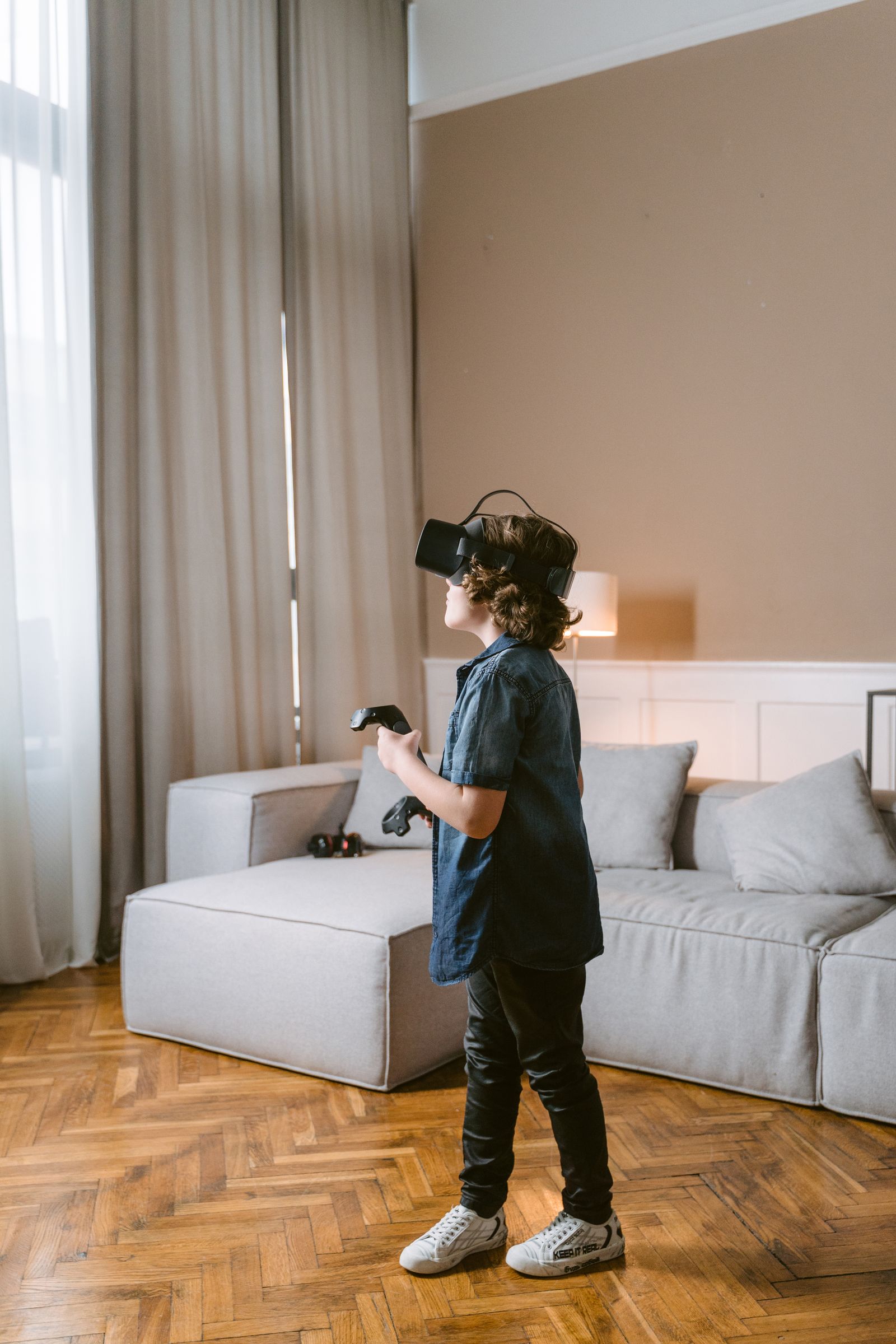
ATC offers VR therapy for specific phobias, OCD triggers and social anxiety. Reviews of randomized trials have found VR exposure helpful for specific phobias, social and performance anxiety, and panic disorder, with results comparable to real-life exposure. Research on VR for OCD is newer and smaller, but early findings are encouraging.
VR isn’t the right fit for everyone. Some people feel motion-sickness-like discomfort, often called cybersickness, and those prone to motion sickness or recent headaches may notice it more. Whether VR is a good fit for you is part of the conversation when your treatment plan is shaped around your age, symptoms and goals.
ATC was founded by Jill Vaughan Tesei, APRN, and Maryellen Pachler Kennell, APRN, to provide expert diagnosis and evidence-based treatment for anxiety in children, adolescents and adults. It is not a general mental health clinic; the practice specializes in anxiety and related disorders, and VR is one of the innovative options it offers for fears, phobias and OCD.
Every plan is designed around the individual’s age, symptoms and goals, with an emphasis on practical, lasting results. VR is used within exposure work and can sit alongside the other methods described on our treatment therapy page. For children and teens, parents are often coached as “anxiety coaches” through parent guidance to reinforce skills at home.
Both founders trained at Yale and teach at the Yale School of Nursing. You can learn more about our team and our office in Cos Cob, serving families in Greenwich, CT and nearby.
No. Although it uses similar technology, VR therapy is a structured part of exposure-based treatment. Scenes are chosen to match the situations you find difficult, and your clinician adjusts them step by step with a clear purpose: helping you face fears and reduce avoidance, not entertainment.
Reviews of randomized controlled trials have found that VR exposure therapy reduces anxiety for conditions such as specific phobias and social anxiety, with results comparable to in-person exposure. VR is considered a complement to traditional exposure rather than a replacement for real-life practice.
Some people do. VR can cause motion-sickness-like discomfort known as cybersickness, and research suggests people who are prone to motion sickness or have had recent headaches may be more sensitive to it. Let your clinician know if this applies to you, or if you feel unwell during a session.
Exposure is done gradually and at your own pace. The aim is to feel some anxiety in a manageable way, not to be overwhelmed. Because the environment is controlled, the intensity can be lowered and raised again as your confidence grows, and you decide together with your clinician when to take the next step.
ATC offers VR therapy for specific phobias, OCD triggers and social anxiety. Research on VR exposure also includes panic disorder and performance anxiety. If you’re unsure whether VR fits your situation, a good first step is a call with the office to talk through your needs and treatment options.

If phobias, OCD triggers or social anxiety are holding you back, we’re here to help. Call (203) 769-1365 to schedule an initial call, or contact us to ask whether virtual reality therapy could be part of your plan.

We provide expert diagnosis and evidence-based treatment for anxiety disorders in children, adolescents, and adults—helping individuals and families move forward with clarity and confidence.
© 2026 All Rights Reserved | Anxiety Treatment Center of Greenwich | Privacy Policy | Terms and Conditions
Website design and marketing by J Curve Advertising
